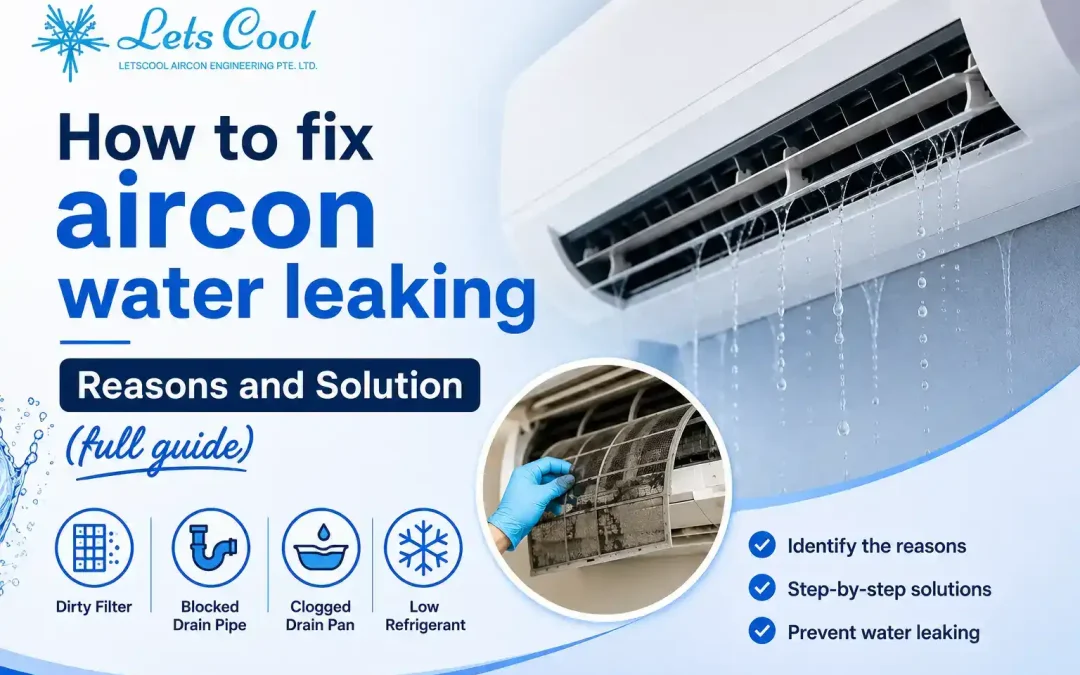
Aircon water leaking is a common problem in Singapore homes. It can happen in HDB flats, condos, landed houses, offices, and commercial spaces.
At first, it may look like a small issue. You may only see a few drops of water from the indoor unit. However, if you ignore it, the problem can become worse. It may cause wall stains, mould smell, wet flooring, ceiling damage, or even electrical risk.
The good news is that most aircon water leakage problems can be fixed once the cause is found. In this guide, we explain the common reasons why your aircon is leaking water, what you can do first, and when you should call an aircon technician.
Aircon Water Leaking in Singapore: Why You Should Not Ignore It
Singapore weather is hot and humid throughout the year. Because of this, many households use their aircon almost every day.
When your aircon is working, it naturally produces condensation. This water should flow out through the drainage pipe. If the water cannot drain properly, it may start leaking from the indoor unit, trunking, wall, or ceiling.
Ignoring aircon water leaking can lead to bigger problems such as:
- Water stains on the wall
- Peeling paint
- Damp ceiling boards
- Mould growth
- Bad smell from the aircon
- Damage to furniture or flooring
- Weak cooling performance
- More expensive repair later
So, if you notice water dripping from your aircon, it is better to check it early.
Why Is My Aircon Leaking Water?
Your aircon may be leaking water because of a blocked drainage pipe, dirty air filter, dirty cooling coil, poor pipe insulation, low gas, or incorrect installation.
Sometimes, cleaning the air filter may help. But if the water keeps dripping, the aircon should be checked by a technician. The technician may need to inspect the drainage pipe, cooling coil, blower, refrigerant level, insulation, and piping condition.
Reasons Why Your Aircon Is Leaking Water
There are many reasons for aircon water leaking. Below are the most common causes.
1. Drainage Pipe Blockage
The drainage pipe removes water from the indoor aircon unit. Over time, dirt, dust, slime, algae, and jelly-like blockage can build up inside the pipe.
When the pipe is blocked, water cannot flow out smoothly. As a result, water may overflow from the indoor unit.
Signs of blocked drainage include:
- Water dripping from indoor unit
- Gurgling sound
- Bad smell
- Water leaking after some time of operation
- Aircon leaking again after a few days
This is one of the most common reasons for aircon water leakage in Singapore.
2. Dirty Air Filter
A dirty air filter blocks airflow. When airflow is weak, the cooling coil may become too cold. This can cause ice to form on the coil.
When the ice melts, it may create excess water and cause leaking.
You can remove and wash the air filter regularly. This simple step can help improve airflow and reduce the chance of water leakage.
3. Dirty Cooling Coil
The cooling coil collects dust and dirt over time. When the coil is dirty, water may not flow properly into the drain pan.
Instead, water may drip from the unit.
A dirty cooling coil can also cause:
- Weak cooling
- Bad smell
- Higher electricity usage
- Ice build-up
- Water leakage
Normal servicing may help if the dirt is light. For heavy dirt or mould, a chemical wash or chemical overhaul may be needed.
4. Mould and Jelly Build-Up
Because Singapore is humid, mould and jelly-like dirt can build up inside the aircon drainage system.
This sticky build-up can block water flow. It may also create a bad smell when the aircon is turned on.
If your aircon has a mouldy smell and water leakage, it may need deep cleaning.
5. Poor Drainage Pipe Gradient
Aircon water must flow out by gravity. If the drainage pipe slope is wrong, water may get stuck inside the pipe.
This can happen due to poor installation or pipe movement over time.
A poor drainage slope may cause repeated water leakage even after servicing.
In this case, the technician may need to check the pipe routing and drainage gradient.
6. Poor or Damaged Pipe Insulation
The copper pipe inside the trunking is cold when the aircon runs. If the insulation is damaged, warm air may touch the cold pipe surface.
This creates condensation.
Over time, water may collect inside the trunking and drip onto the wall or floor.
Good insulation is important because it helps prevent sweating pipes and hidden leakage.
7. Frozen Coil Due to Low Refrigerant
Low refrigerant or gas leakage can cause the cooling coil to freeze. When the ice melts, water may overflow and leak from the aircon.
Signs of low refrigerant may include:
- Aircon not cold
- Ice on the coil or pipe
- Water dripping after long operation
- Outdoor unit running but room not cooling well
Do not simply top up gas without checking for leakage. A proper technician should check the refrigerant pressure and possible leak points.
8. Cracked or Damaged Drain Pan
The drain pan collects water from the cooling coil and guides it into the drainage pipe.
If the drain pan is cracked, damaged, or not aligned properly, water may leak from the indoor unit.
This issue is less common, but it can happen in older aircon units.
9. Poor Installation Workmanship
Poor installation can cause many water leakage problems.
Examples include:
- Wrong drainage slope
- Poor pipe insulation
- Loose pipe connection
- Poor trunking sealing
- Incorrect fan coil position
- Weak drainage support
That is why it is important to choose an experienced aircon installation company. Proper installation helps prevent water leakage, condensation, and future repair issues.
How to Fix Aircon Water Leaking Step by Step
Here are some simple steps you can take when your aircon starts leaking water.
Step 1: Switch Off the Aircon
If water is dripping from the indoor unit, switch off the aircon first.
This helps prevent more water from leaking. It also reduces the risk of water reaching electrical parts.
Do not continue using the aircon if the leakage is serious.
Step 2: Check and Clean the Air Filter
Open the front cover and check the air filter.
If the filter is dusty, remove it and wash it with clean water. Let it dry fully before putting it back.
A clean filter helps improve airflow and cooling performance.
Step 3: Check for Ice Build-Up
Look for ice on the coil, pipe, or indoor unit area. If you see ice, switch off the aircon and let the ice melt.
Ice build-up may be caused by dirty filters, dirty coils, low gas, or poor airflow.
If the ice comes back again, call a technician to check the unit.
Step 4: Look for Water Around the Trunking
Check the aircon trunking, wall, and ceiling area.
If the trunking is wet, the issue may be related to pipe insulation or hidden drainage leakage.
This type of problem usually needs a technician because the pipe may be inside the trunking.
Step 5: Check If the Drainage Pipe Is Blocked
If water is not flowing out properly, the drainage pipe may be blocked.
Some homeowners may try to clear the drain outlet area. However, avoid using harsh chemicals or sharp objects.
Wrong handling may damage the pipe or push the blockage deeper.
Step 6: Arrange Professional Aircon Servicing
If the water still leaks after basic checking, arrange for aircon servicing.
A technician can clean the indoor unit, flush the drainage pipe, check the drain pan, inspect the cooling coil, and test the water flow.
For serious dirt or mould, normal servicing may not be enough.
Step 7: Repair Insulation or Rework Drainage If Needed
If the leakage is caused by poor insulation or drainage slope, servicing alone may not solve the problem.
The technician may need to repair the insulation, reseal the trunking, adjust the pipe, or rework the drainage line.
This is especially common when water leaks from trunking or wall areas.
How Much Does It Cost to Fix Aircon Water Leaking in Singapore?
The cost depends on the cause of the leakage and the work needed.
Here is a simple guide:
| Problem | Possible Solution | Cost Level |
| Dirty filter or light blockage | General servicing | Lower |
| Dirty coil and blower | Chemical wash | Medium |
| Heavy mould or serious blockage | AC Chemical overhaul | Higher |
| Poor insulation | Insulation repair | Depends on site |
| Wrong drainage slope | Drainage pipe rework | Depends on site inspection |
| Cracked drain pan | Part replacement | Depends on model |
For accurate pricing, it is better to let a technician check the aircon first. This helps avoid paying for the wrong solution.
How to Prevent Aircon Water Leakage
Prevention is always better than repair. With regular care, you can reduce the chance of aircon water leaking.
Service Your Aircon Regularly
Regular servicing helps keep the aircon clean. It also allows the technician to clear the drainage pipe before it becomes fully blocked.
Clean the Filter Often
If you use your aircon daily, clean the filter more often. A clean filter improves airflow and reduces ice build-up.
Avoid Setting the Temperature Too Low
Setting the aircon too cold for long hours may cause more condensation. A comfortable temperature setting can help reduce strain on the unit.
Check for Early Water Marks
If you see water stains, damp walls, or wet trunking, check early. Do not wait until water starts dripping badly.
Use Proper Installation Materials
Good insulation, proper drainage piping, and neat workmanship can help prevent future leakage issues.
Fix Small Leakage Early
A small leak may become a bigger problem if ignored. Early checking can save repair cost and prevent property damage.
Get Free Consultation With us
Frequently Asked Questions
Why is my aircon leaking water from the indoor unit?
Your aircon may be leaking water from the indoor unit because of a blocked drainage pipe, dirty cooling coil, dirty air filter, frozen coil, or damaged drain pan. If the water keeps dripping, you should arrange for servicing and inspection.
Can I still use my aircon if it is leaking water?
It is better to switch off the aircon if water is dripping badly. Continuing to use it may cause more water damage and may affect electrical parts inside the unit.
Why is my aircon leaking water after servicing?
This may happen if the drainage pipe is still blocked, the drain pan is not aligned properly, or there is another issue such as poor insulation or drainage slope. You should ask the servicing team to check again.
Why is my aircon pipe sweating?
Aircon pipe sweating usually happens when warm humid air touches the cold pipe. This is often due to poor, damaged, or old pipe insulation.
How do I stop water leaking from aircon trunking?
You need to find the source of the water first. It may be caused by condensation, damaged insulation, or drainage leakage inside the trunking. A technician may need to open the trunking to check.
Is chemical wash needed for aircon water leakage?
Chemical wash may be needed if the leakage is caused by a very dirty cooling coil, mould build-up, or poor water flow inside the unit. For light blockage, normal servicing may be enough.
Can low gas cause aircon water leaking?
Yes, low refrigerant may cause the cooling coil to freeze. When the ice melts, water may overflow and leak from the indoor unit. A technician should check for gas pressure and possible leakage before topping up.
Why is my aircon leaking only at night?
Your aircon may leak at night because it runs for long hours. This can increase condensation. If the drainage pipe is partially blocked or the coil is dirty, water may overflow after a few hours.
What should I do first when my aircon starts leaking?
Switch off the aircon, wipe the water, and check the air filter. If the water continues to leak after cleaning the filter, arrange for a technician to inspect the unit.