
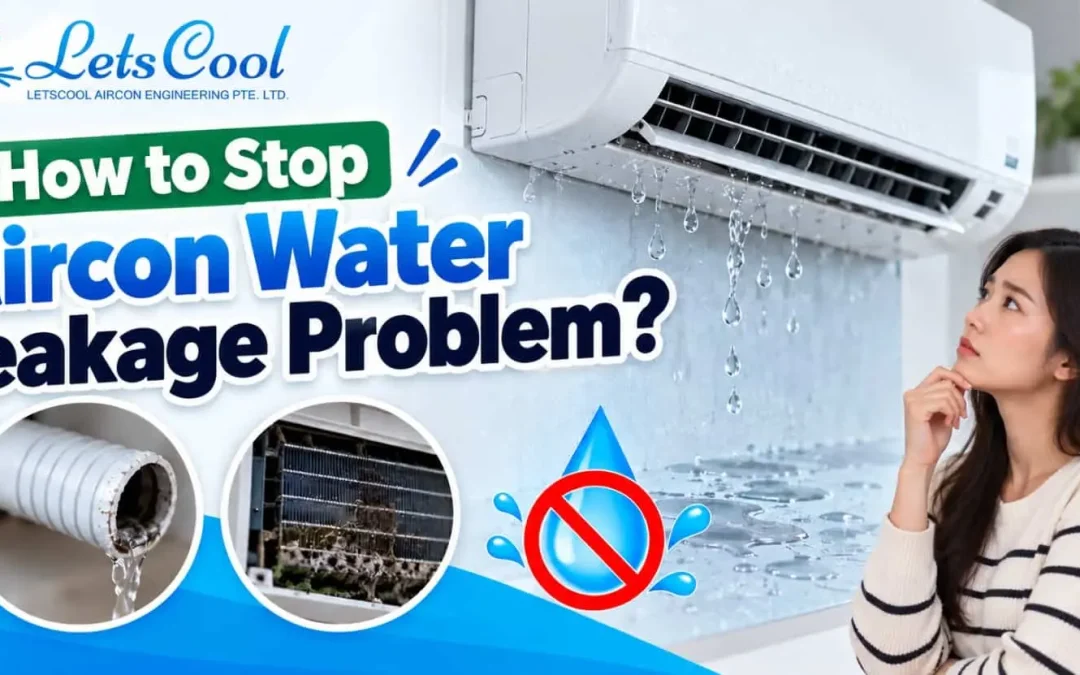
Aircon water leakage
Reason to Happen Airconditioner Water Leakage.
Aircon remove humidity and heat from a house by taking indoor air and passing it over a cooling coil. Humidity, that can be seen as water droplets, is present on the coil. When the droplets have become large enough, they will wrong to a condensation pan that is below. The water collected is then delivered outdoors through a condensation drain in the interior. If this water starts bleeding, there are some problems that can appear. Some common problems associated with leaking air conditions are mildew and mold. Mildew or mold is calamitous as it will start ruining interior finishes of a home.
If you are living in Singapore, there are two main methods you can use for aircon leakage prevention. You can implement some preventive measures which will ensure your aircon does not leak. another option, a professional and experienced aircon technician can check your unit often. If the leak has started, you can follow a simple aircon leakage prevention process.
Refer: Aircon Repair
A process of stop to water leakage
Get a flashlight to find the leaking part and try to find the leaking point. If you find that water appears to come room the interior of a metal housing, turn it and all electrical power off. The air handler’s interior drain pan should be accessed. Have a see at the manufacturer’s manual to find the service door. Open it and take a look inside. If the coil does not have any ice and the moisture pan has been filled with water drops, debris should be filling the drain pipe. Aircon servicing singapore
Check for any moisture in the drain tube especially if it drains aircon outdoors. Debris from rodents may be present inside the drainpipe. Check for obstructions in the drain tube when a rubber hose is used for drainage. Clean the tube using a wire that is long and stiff. If the cooling coil has been iced over, restore the air filter. When there is reduced air flow, the coil is likely to form ice that normally seeds water to start leaking from the unit. If clean the air filter does not work, you should think of replacing it.
refer: Aircon installation
Why Is My Aircon Leaking Water?
An air conditioner produces condensation during normal operation.
Warm air from the room passes over the cold evaporator coil. Moisture in that air condenses on the coil and becomes water droplets. The water then collects in the drain tray and flows through a drainage pipe.
If this process works correctly, the water leaves the system without entering your room.
However, a blocked drain, dirty filter, frozen coil, damaged drain tray, poor drainage or another technical issue can interrupt the process.
Some of the most common causes include:
- Blocked aircon drain pipe
- Dirty air filter
- Dirty evaporator coil
- Frozen evaporator coil
- Damaged drain tray
- Incorrect drainage slope
- Faulty condensate pump
- Damaged insulation
- Refrigerant-related problems
- Installation issues
Let’s look at each cause in more detail.
1. Blocked Aircon Drain Pipe
A blocked drain pipe is one of the common reasons for an indoor aircon water leak.
The drainage pipe carries condensation away from the indoor unit. Over time, dust, algae, mould, slime, and other debris can build up inside the pipe.
As the blockage becomes worse, water may drain slowly or stop draining completely. The drain tray can then fill with water and eventually overflow.
Signs of a blocked drain include:
- Water dripping from the indoor unit
- Water collecting underneath the aircon
- Leakage after the aircon has been running for some time
- Unusual gurgling sounds
- Musty smells
- Poor water drainage from the outlet
If the drain pipe is blocked, simply wiping the visible water will not solve the problem. The drainage system needs to be checked and cleared.
2. Dirty Aircon Filter
Your aircon filter catches dust and airborne particles before they reach the internal components.
When the filter becomes heavily covered with dust, airflow through the indoor unit can become restricted.
Poor airflow may cause the evaporator coil to become excessively cold. In some situations, ice can form on the coil. When the ice eventually melts, excess water can contribute to leakage.
Cleaning the filter is one of the easiest maintenance tasks homeowners can perform.
Remove the accessible filter and clean it according to the manufacturer’s recommendations. Make sure it is completely dry before putting it back.
If the aircon continues leaking after filter cleaning, another issue may be responsible.
3. Dirty Evaporator Coil
The evaporator coil plays an important role in cooling your room.
Over time, dust and dirt can accumulate on the coil, especially when an aircon is used frequently or filters are not cleaned regularly.
A heavily dirty coil can restrict airflow and affect normal condensation and drainage.
You may notice:
- Water leakage
- Weak cooling
- Reduced airflow
- Unpleasant smell
- Longer cooling time
- Ice formation
Routine aircon servicing can help keep the filter, coil, blower and drainage components in better condition.
If the internal components are heavily contaminated, a professional chemical wash may be recommended depending on the condition of the unit.
4. Frozen Evaporator Coil
Ice around the indoor unit is another warning sign that should not be ignored.
A frozen evaporator coil may be caused by restricted airflow, a dirty filter, a dirty coil or refrigerant-related problems.
When the aircon is switched off, the ice melts. The resulting water may exceed what the drainage system can handle, leading to leakage.
If you see ice, switch off the aircon and allow it to thaw naturally.
Do not use sharp objects to remove the ice. You could damage the coil or other components.
If freezing happens repeatedly, professional inspection is recommended.
5. Damaged or Misaligned Drain Tray
The drain tray collects condensation from the evaporator coil before directing the water toward the drainage pipe.
A tray can become damaged, cracked, loose or incorrectly positioned over time.
If the tray cannot collect or direct water properly, condensation may escape from the indoor unit.
This type of problem usually requires a technician to inspect the internal components.
If cleaning the filters and drainage system does not resolve the leak, the drain tray should be checked.
6. Poor Drainage Slope
Aircon drainage depends on the water being able to move away from the indoor unit.
If the drainage pipe does not have the correct slope, water may remain inside the pipe instead of flowing away.
A pipe can also become displaced or develop sections where water collects.
This may result in intermittent leakage, particularly when the aircon has been running for a longer period.
A technician can inspect the drainage route and determine whether an adjustment or repair is necessary.
7. Faulty Condensate Pump
Some aircon systems use a condensate pump when gravity drainage is not practical.
The pump helps move condensation water away from the indoor unit.
If the pump becomes blocked, dirty or faulty, water may accumulate and eventually overflow.
Pump problems are generally better handled by a trained technician because testing may be required to identify whether cleaning, repair or replacement is necessary.
8. Damaged Pipe Insulation
The refrigerant pipes connected to your aircon are normally covered with insulation.
When this insulation becomes damaged, compressed or worn, condensation can form around exposed sections of the pipe.
You may notice moisture around the trunking or wall rather than directly underneath the indoor unit.
Replacing damaged insulation can help prevent condensation from forming where it should not.
9. Could Low Refrigerant Cause Water Leakage?
Low refrigerant does not automatically mean that your aircon will leak water.
However, refrigerant problems can sometimes contribute to evaporator coil freezing. When the accumulated ice melts, water may then drip from the indoor unit.
This is why adding refrigerant should not be treated as the automatic answer to every water leakage problem.
A technician should first determine why the refrigerant level is low.
If a refrigerant issue is confirmed, a suitable gas top-up may be required. If there is a refrigerant leak, however, the underlying leak should be investigated rather than repeatedly adding gas.
Booking Here
We Support 24*7