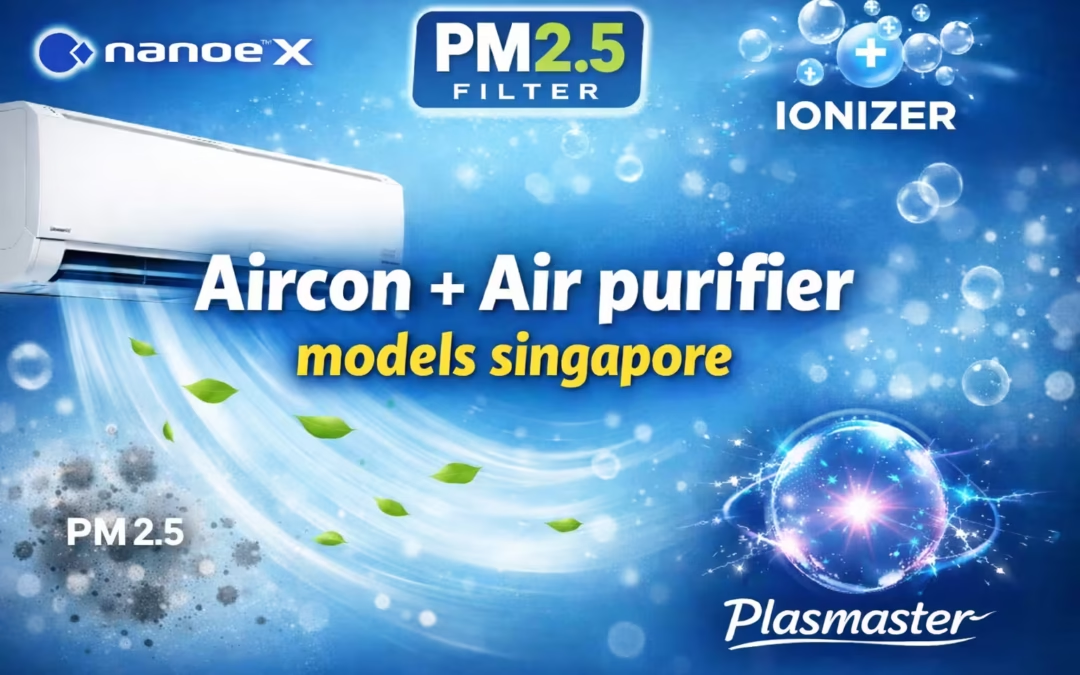
Singapore’s hot, humid climate means many homes run air-conditioning daily. But cooling comfort is only one part of the story—indoor air quality matters too, especially during haze season, renovation periods, or when family members have allergies. That’s why more homeowners now search for aircon with air purifier, aircon with PM2.5 filter, and “clean air” technologies like nanoe™ X, Streamer, or ionizer.
In this guide, LetsCool Aircon shares a complete, practical overview: which aircon models in Singapore come with air-cleaning features, what the benefits really are, which are best for residential use (HDB and condo), what’s suitable for baby rooms, how the technologies compare, and how to choose the right BTU size based on room size.
What “air purifier technology” in an aircon actually means
When brands say “air purifier,” it usually doesn’t mean the aircon is the same as a dedicated HEPA air purifier. Most residential split aircons use a combination of filters and active air-treatment features that work as the indoor unit continuously circulates room air. The effectiveness depends on the type of filter, airflow volume, room size, and how clean the system is.
In general, aircon “purifying” features fall into two categories: particle filtration (better for dust and haze particles) and active treatment (often used for deodorising and reducing certain contaminants based on brand testing). Understanding this difference helps you choose the right model for your needs—especially in Singapore where haze, humidity, and indoor odours are common.
Buy: Daikin Air purifier
PM2.5 / high-efficiency filters (best for haze and dust)
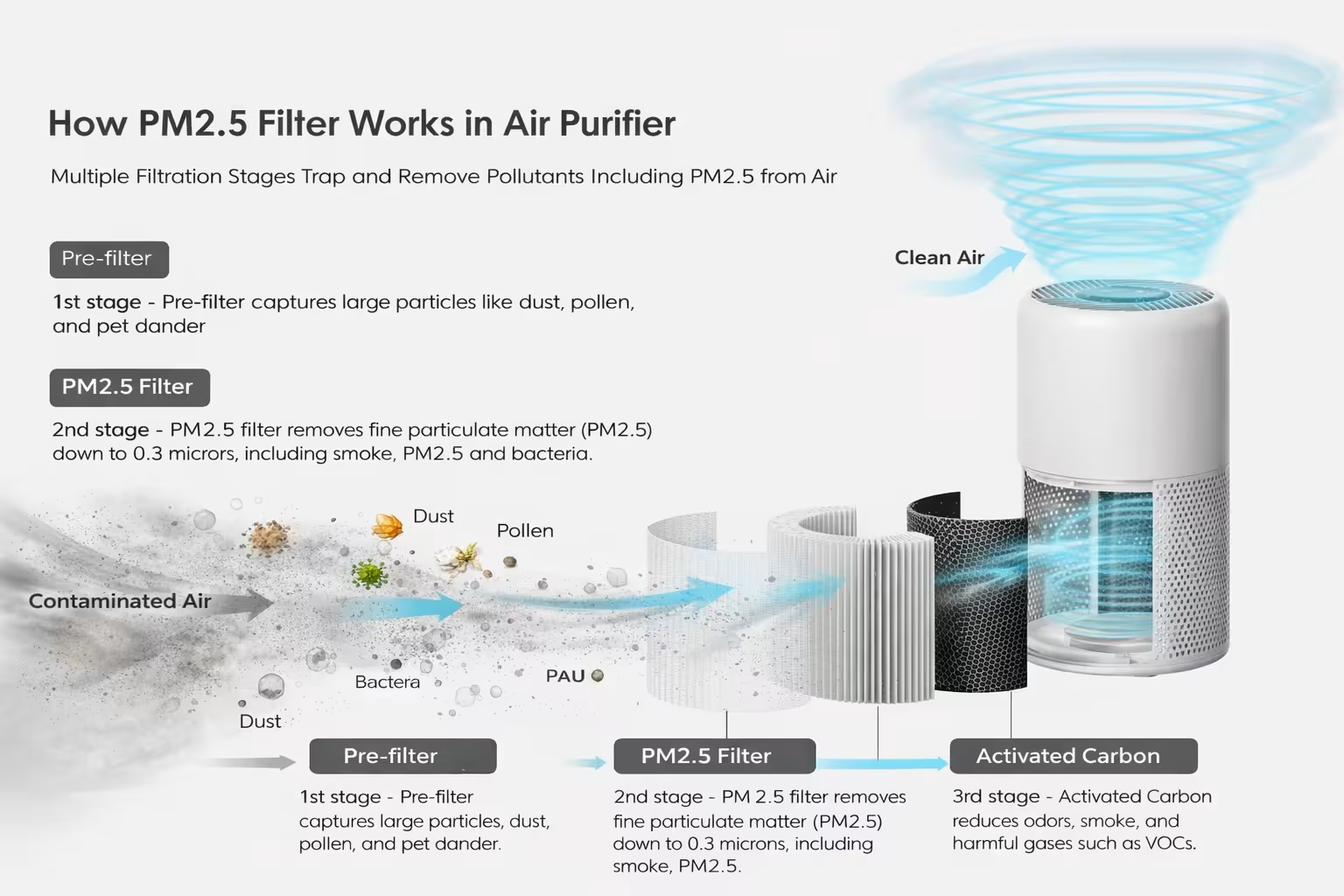
PM2.5 filters are designed to capture finer particles compared to standard mesh filters. If your concern is haze, dust, pollen, or allergies triggered by particles, PM2.5/high-efficiency filtration is usually the most direct feature to look for. It works by physically trapping particles as air passes through the indoor unit, and it tends to be the most noticeable “clean air” improvement for many households.
However, filters still require proper upkeep. If filters are clogged, airflow drops and cooling performance suffers. For Singapore homes, cleaning filters regularly and doing scheduled aircon servicing is essential to maintain both comfort and cleaner airflow.
Ionizer / plasma / active air treatment (best as a bonus feature)
Ionizer or plasma-based systems (and other “active air” technologies) are often marketed for improving air freshness and reducing odours, with additional claims relating to certain microbes or airborne contaminants. These systems work differently from filters—they rely on air passing through the unit and interacting with the internal treatment component.
For homeowners, the key is to treat these as a bonus, not a replacement for filtration. If your main worry is haze particles and dust, focus on a good filter system first. If your home frequently has cooking smells, pet odour, or you simply want a fresher-feeling room, active air features can be worth considering—especially when paired with good maintenance and consistent operation.
Aircon models with air purifier features (SG Guide)
Below are common model lines/series marketed in Singapore that include air-cleaning features such as PM2.5 filtration, ionizers, or branded air-treatment technology. Features can vary by indoor unit model number, so always confirm the exact specification before purchase.
Daikin (Streamer Technology / iSmile series)
Daikin Aircon promotes Streamer Technology on selected lines, positioning it as an air-cleaning feature. If you’re comparing Daikin models, look for specifications that explicitly mention Streamer or air purification features within the product series you’re considering.
Buy Now: Daikin i-smile series
Panasonic (nanoe™ X)
Panasonic’s residential systems often highlight nanoe™ X as a key air treatment feature. This is popular among Singapore homeowners who want an “air freshness” feature beyond basic filtration, especially for bedrooms and family living areas.
Mitsubishi Electric (Starmex with PM2.5 filtration options)
Many Singapore buyers shortlist Mitsubishi Electric Starmex because selected models support PM2.5 filtration options and additional filter enhancements depending on the series. For haze-sensitive households, this can be a practical choice—especially when paired with regular servicing.
Samsung (WindFree with PM2.5 filter)
Samsung’s WindFree lineup is often promoted with a PM2.5 filter feature in addition to airflow comfort positioning. This is commonly considered by homeowners who want both gentle airflow comfort and improved particle filtration.
LG (Plasmaster™ Ionizer+)
LG promotes models with Plasmaster Ionizer+ as part of indoor air quality features. This is often a consideration for buyers who prefer ion-based air-treatment features as an added layer of “cleaner air” support.
Midea (Air Magic / Ionizer)
Some Midea aircon models marketed in Singapore include ionizer-related “Air Magic” features, offering a more value-driven route for buyers who want air-treatment features without going to premium price tiers.
Sharp (Plasmacluster Ion – selected models)
Sharp’s Plasmacluster technology appears on selected aircon offerings sold through Singapore retailers. This option is less commonly chosen compared to the big three (Daikin / Panasonic / Mitsubishi Electric), but it can be relevant for shoppers specifically looking for Plasmacluster-branded air-treatment tech.
Benefits of aircon with air purifier features in Singapore homes
For Singapore residences, the biggest practical benefit is often improved comfort during dusty periods and better day-to-day indoor air freshness. If your unit includes PM2.5 filtration, you may notice less dust accumulation and better haze-season comfort (though it won’t “seal” your home—outdoor exposure still matters).
Active air-treatment features can help with perceived air freshness and mild odour reduction in bedrooms or living rooms, especially when the system runs consistently. The most important point is that air purification features work best when the aircon is clean and operating correctly—dirty coils, clogged blowers, and stagnant drainage can create smells that no “purifier mode” can fix.
Which purification technology is better: nanoe™ X vs Streamer vs Ionizer vs PM2.5 filter?
The “best” technology depends on what you’re trying to solve. For haze, dust, and allergy triggers, PM2.5 / high-efficiency filtration is usually the most straightforward feature because it physically captures particles. For odours and “fresh air” positioning, active air-treatment systems like nanoe™ X, Streamer, or ionizer features are often marketed for that purpose, and many homeowners choose them as an added benefit.
A practical way to decide is this: if your home has haze sensitivity or you want more measurable particle capture, prioritize filtration first. If your home is more concerned with air freshness, cooking odours, or you want an extra layer of “air-cleaning support,” then active features can be worthwhile—especially when combined with a model that still has strong basic filtration and good maintenance support.
Best aircon brands to buy for residential (HDB and condo in Singapore)
For residential buyers, “best brand” usually comes down to the balance of reliability, parts support, energy efficiency, and proper installation. In Singapore, the same model can perform very differently depending on piping route, drainage slope, trunking quality, vacuuming, pressure test, and whether the unit is correctly sized.
As a general buying approach, shortlist two or three brands that fit your budget, then compare the exact indoor unit specs for the air-cleaning features you want (PM2.5 filter vs active air tech). Finally, choose a reputable installer who can support long-term servicing—because installation quality and maintenance have a bigger impact than many people expect.
Refer blog: Best Aircon Brands singapore for residential use
Best aircon for a baby room in Singapore
For baby rooms, comfort stability and gentle airflow matter more than chasing the “strongest” purifier marketing. A baby room should avoid cold drafts directly hitting the cot, and it should maintain steady temperature with low noise. Correct BTU sizing is especially important here—oversized aircons cool too quickly and cycle on/off, which can feel uncomfortable in humid conditions.
If you want cleaner air support for a baby room, select a model that offers PM2.5 filtration and pair it with good filter hygiene. Many parents also choose to use a standalone HEPA purifier in the baby room for additional particle filtration, while the aircon focuses on stable temperature and humidity comfort.
How to choose aircon BTU size based on room size (Singapore guide)
BTU sizing is the foundation of both comfort and efficiency. If BTU is too low, the room struggles to cool and the unit runs constantly. If BTU is too high, the room cools too fast, the unit cycles more often, and the space can feel clammy—especially in Singapore’s humidity.
A practical residential guideline many installers use is:
- 9,000 BTU for small bedrooms
- 12,000 BTU for common bedrooms
- 18,000 BTU for large bedrooms
- 24,000 BTU for small-to-medium living rooms
You should adjust upwards if the room has strong west sun, top-floor heat load, higher ceilings, or heavy heat sources (multiple occupants, gaming PCs, cooking nearby). If you’re unsure, Letscool can recommend the right capacity after checking your layout and usage pattern.
Refer blog : Aircon Installation Guide for HDB, Singapore
How to choose the right “aircon + air purifier” for your home (buyer checklist)
A professional buyer checklist should start with your goal: haze/dust, odour, allergies, or baby-room comfort. Once your goal is clear, check whether the model offers PM2.5 filtration (for particles) and what type of active air-treatment it includes (if you want that extra layer). Also review energy efficiency (running cost matters in Singapore) and noise levels for bedrooms.
Equally important is installation quality. Good piping design, correct drainage fall, proper insulation, and complete vacuuming/testing protect your performance long-term. Many “aircon smell” and “weak airflow” complaints come from maintenance or installation issues—not from missing purifier features.
Maintenance tips to keep the air-cleaning feature effective
Even the best aircon purifier feature won’t help if the unit is clogged with dust. For Singapore homes, wash air filters regularly (every few weeks for many families), and schedule servicing based on usage. If there is persistent odour, weak airflow, or water leaking, it may require deeper cleaning such as blower cleaning or chemical wash depending on condition.
At Letscool, we always remind homeowners: cleaner air starts with a clean system. Regular aircon servicing in Singapore, proper chemical cleaning when needed, and correct installation standards are what keep both cooling and air quality consistent.
Refer blog : Benefits of regular aircon servicing
Letscool recommendation: the simplest way to decide
If your main goal is haze + dust, prioritise a model with PM2.5/high-efficiency filtration, correct BTU sizing, and reliable servicing support. If your goal is air freshness and odour support, consider models with branded active technologies like nanoe™ X or Streamer as an additional layer. For baby rooms, focus on quiet operation, gentle airflow, and stable comfort first—then add filtration features as a plus.
If you share your room sizes and whether you’re choosing System 2 / System 3 / System 4 / System 5, Letscool can recommend the best BTU combination and suitable model types for your home in Singapore.