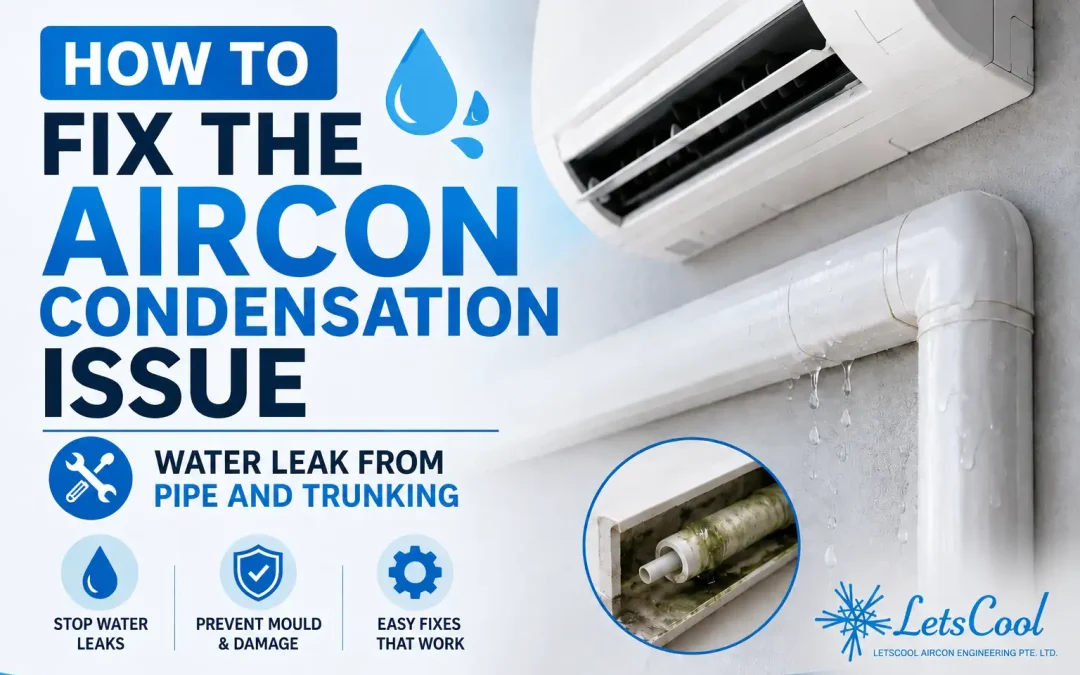
Aircon condensation is a common issue in Singapore homes.
You may see water droplets on your aircon pipe, trunking, wall, or indoor unit. Some homeowners may think it is just normal water. Others may worry that the aircon is leaking.
In Singapore’s hot and humid weather, condensation can happen easily. But if the water keeps dripping or the wall becomes wet, it may be a sign of an aircon problem.
This guide explains what aircon condensation means, why it happens, how to prevent it, and when you should call an aircon technician.
What Is Aircon Condensation?
Aircon condensation happens when warm humid air touches a cold surface.
For example, when a cold drink is left on a table, water droplets form outside the cup. The same thing can happen to your aircon pipe or trunking.
Your aircon pipe becomes cold when the aircon is running. When humid air touches the cold pipe, water droplets may form.
Condensation can appear on:
- Aircon copper pipe
- Aircon trunking
- Indoor aircon unit
- Drainage pipe
- Wall near the aircon
- False ceiling area
A small amount of condensation can be normal. But if water keeps dripping, it should be checked.
Why Aircon Condensation Happens
Aircon condensation happens when warm, humid air touches cold aircon parts.
When your aircon is running, the copper pipe, cooling coil, and some parts inside the unit become cold. If the surrounding air has a lot of moisture, the moisture can turn into small water droplets when it touches these cold surfaces.
This is similar to water droplets forming outside a cold drink cup.
In Singapore, this happens more often because the weather is hot and humid. Condensation can also become worse if the pipe insulation is old, damaged, or not sealed properly.
Light condensation may be normal. But if water keeps dripping, the trunking is always wet, or the wall becomes damp, it may be a sign of poor insulation, blocked drainage, or another aircon issue.
Common Signs of Aircon Condensation
You may have an aircon condensation problem if you notice these signs:
- Water droplets on the aircon pipe
- Trunking feels wet
- Water leaking from the trunking
- Wall near the aircon becomes damp
- Paint starts peeling
- Yellow or brown stains on the wall
- Musty smell in the room
- Water marks on the ceiling
- Aircon is not cold and water is dripping
If this happens once in a while, it may be due to high humidity. But if it happens often, there may be a problem with the aircon.
Is Aircon Condensation Normal?
Light condensation can be normal in Singapore.But heavy condensation is not normal.
If your aircon trunking is wet every day, or water keeps dripping, you should not ignore it. The issue may come from poor insulation, a blocked drain pipe, dirty aircon parts, or poor installation.If the problem is not fixed early, it can damage your wall, ceiling, paint, or furniture.
Main Causes of Aircon Condensation
There are a few common reasons why aircon condensation happens.
1. Poor or Damaged Pipe Insulation
Aircon copper pipes become very cold when the aircon is running. If the insulation around the pipe is old, thin, broken, or not covered properly, warm air can touch the cold pipe.
When this happens, water droplets can form on the pipe. This is why the aircon pipe may look like it is sweating.
2. Aircon Trunking Is Not Sealed Properly
Aircon trunking covers the aircon pipes and keeps the installation neat. But if there are gaps in the trunking, humid air can go inside.
When the humid air touches the cold pipe, water droplets may form. After some time, water may drip from the trunking.
3. Dirty Air Filter
A dirty air filter can block the airflow of the aircon. When the air cannot flow properly, the cooling coil may become too cold.
Sometimes, ice may form inside the unit. When the ice melts, water may drip from the aircon.
4. Blocked Drain Pipe
Your aircon removes moisture from the room and sends the water out through the drain pipe. If the drain pipe is blocked, the water cannot flow out properly.
The water may overflow from the indoor unit or trunking. This may look like condensation, but it is actually an aircon water leaking problem.
5. Low Gas or Refrigerant Issue
Low gas can affect the cooling performance of the aircon. It may cause the cooling coil to become too cold and freeze.
When the ice melts, water may drip from the aircon. If your aircon is not cold and leaking water, it is better to ask a technician to check it.
6. Poor Aircon Installation
Poor aircon installation can cause condensation problems later. This may happen when the pipe insulation is not done properly, the drainage pipe has poor slope, or the trunking is not sealed well.
If the piping route is badly planned or the wrong material is used, water droplets may form more easily. A proper installation helps prevent condensation, water leakage, and future repair issues.
7. Aircon Temperature Is Set Too Low
If the aircon temperature is set too low, such as 16°C or 18°C, the aircon parts can become very cold.
When the room is humid, warm moisture in the air may touch the cold parts and turn into water droplets. For normal home use, setting the aircon around 24°C to 26°C is usually more comfortable and can also help save electricity.
8. Room Is Too Humid
Sometimes condensation happens because the room has too much moisture in the air.
This can happen when windows are closed for many hours, wet clothes are dried indoors, or the room has poor airflow. Bathroom moisture, many people in the room, and rainy weather can also increase humidity.
When the room is very humid, condensation can form more easily on cold aircon pipes, trunking, or walls.
Can Aircon Condensation Damage Your Home?
Yes, it can.If condensation happens for a long time, it may cause damage to your home.
It can lead to:
- Wall stains
- Paint peeling
- Mould smell
- Damp ceiling
- Wet furniture
- Damage to wooden cabinets
- Water marks on false ceiling
- Safety risk near electrical points
If water is near a power socket or switch, turn off the aircon and call a technician.
How to Stop Aircon Condensation
Imagine you wake up in the morning and notice your aircon trunking is wet. The wall beside it also feels a little damp. At first, you may think it is just normal moisture. But when it happens again and again, it may be time to check what is causing it.
The good thing is, aircon condensation can often be reduced with the right care.
1. Start With the Air Filter
The first thing to check is the air filter.
When the filter is clean, air can pass through the aircon smoothly. But when the filter is full of dust, airflow becomes weak. This can make the cooling coil too cold and may cause ice to form inside the unit.
When the ice melts, water may start dripping. So, if you use your aircon often, cleaning the filter regularly is a simple way to reduce condensation problems.
2. Do Regular Aircon Servicing
Sometimes, the outside of the aircon looks clean, but the inside may already be dirty.
Dust, jelly, and dirt can build up inside the cooling coil, blower, and drainage pipe. When this happens, the aircon may become less cold, smell bad, or start leaking water.
Regular aircon servicing helps keep the unit clean and working smoothly. For most Singapore homes, servicing every 3 to 4 months is a good practice, especially if the aircon is used daily.
3. Check the Drain Pipe
Your aircon removes moisture from the room while cooling the air. This water should flow out through the drain pipe.
But if the drain pipe is blocked, the water has nowhere to go. It may overflow from the indoor unit or leak from the trunking area.
A technician can clear the drainage pipe and check whether the water is flowing out properly.
4. Check the Pipe Insulation
If your aircon pipe looks like it is sweating, the insulation may be the main problem.
The copper pipe inside the trunking is very cold when the aircon is running. If the insulation is old, damaged, thin, or not sealed well, warm humid air can touch the cold pipe.
This creates water droplets. Good insulation helps protect the pipe and reduces wet trunking or dripping water issues.
5. Avoid Setting the Aircon Too Cold
Many people set the aircon at 16°C or 18°C because they want the room to cool faster.
But when the aircon runs too cold for many hours, the pipe and coil become extremely cold. In a humid room, this can increase condensation.
For normal home use, setting the temperature around 24°C to 26°C is usually more comfortable. It can also help save electricity.
6. Improve Room Ventilation
If the room feels very humid, open the windows for a short while before switching on the aircon.
This helps the warm and moist air leave the room first. After that, the aircon can cool the room more smoothly.
Also, try not to dry wet clothes inside an aircon room. Wet clothes add more moisture to the air and can make condensation worse.
7. Call a Technician If the Problem Comes Back
If the trunking is always wet, the wall keeps getting damp, or water keeps dripping, simple cleaning may not be enough.
The problem may be hidden inside the trunking, ceiling, drain pipe, or aircon piping route.
In this case, it is better to call an aircon technician. A proper check can help find out whether the issue is due to poor insulation, blocked drainage, dirty parts, or installation problems.
Frequently Asked Questions
Why is my aircon pipe sweating?
Your aircon pipe may sweat when warm humid air touches the cold pipe surface. This can happen if the pipe insulation is weak, damaged, or not sealed properly.
Is aircon condensation normal in Singapore?
Light condensation can be normal because Singapore is very humid. But if water keeps dripping, trunking stays wet, or the wall becomes damp, the aircon should be checked.
Why is my aircon trunking wet?
Aircon trunking may become wet when cold pipes inside the trunking are not insulated properly. Humid air can enter the trunking and turn into water droplets.
Is aircon condensation the same as water leakage?
Not always. Condensation usually forms on cold surfaces, while water leakage may come from a blocked drain pipe, dirty coil, low gas, or installation issue.
Can aircon condensation damage my wall?
Yes, constant condensation can cause wall stains, paint peeling, mould smell, or damp patches. It is better to fix the cause early before the damage becomes worse.
How do I stop aircon condensation?
You can clean the filter, avoid setting the temperature too low, improve room ventilation, and arrange regular servicing. If the pipe insulation is damaged, a technician may need to repair it.
When should I call a technician for aircon condensation?
Call a technician if water keeps dripping, trunking is wet every day, the wall is damp, or the aircon is not cold. These signs may mean the issue is more than normal condensation.
Can poor aircon installation cause condensation?
Yes, poor installation can cause condensation if the insulation, drainage, or piping route is not done properly. Proper workmanship is important for long-term aircon performance.