
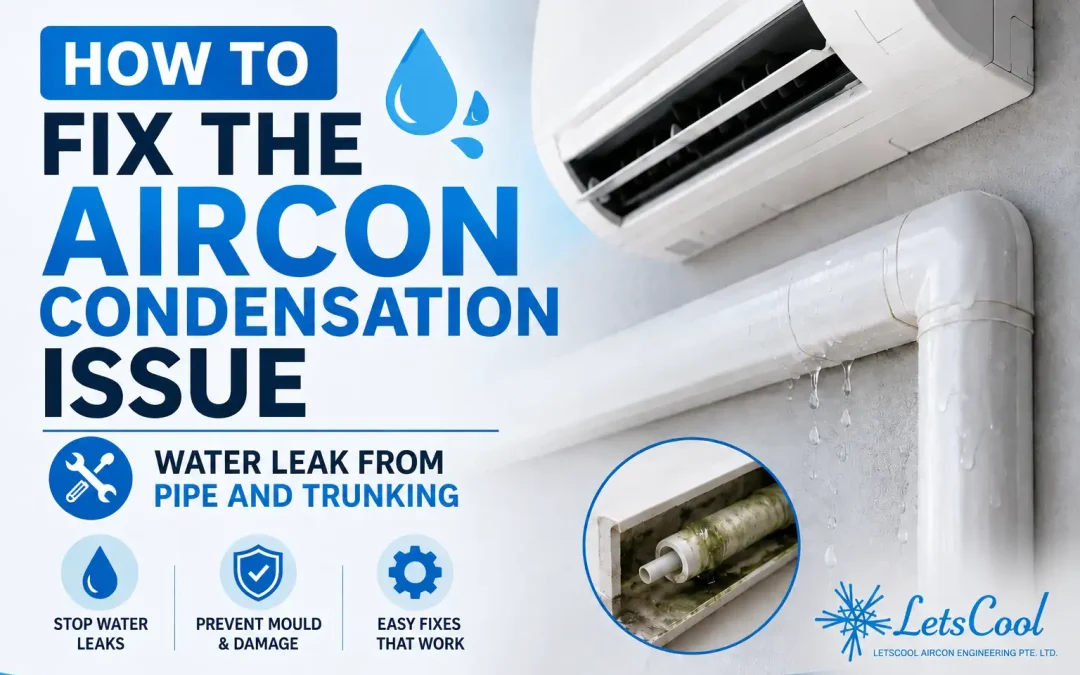
Is your aircon dripping water from the indoor unit, pipe, or trunking? The problem may be caused by normal condensation, damaged pipe insulation, a clogged drainage pipe, restricted airflow, or another aircon fault.
Aircon condensation is common in Singapore because warm, humid air frequently comes into contact with cold aircon pipes and surfaces. A small amount of moisture may be normal. However, constant dripping, wet trunking, water stains or damp walls should be inspected before they cause more damage.
This guide explains why your aircon is dripping water, how to distinguish condensation from drainage leakage, what you can check safely, and when you should call an aircon technician.
Why Is My Aircon Dripping Water?
An aircon may drip water when condensation forms on a poorly insulated cold surface or when the condensed water cannot drain correctly. Common causes include a clogged drainpipe, dirty air filter, frozen cooling coil, damaged pipe insulation, poorly sealed trunking, and incorrect drainage installation.
The location of the dripping can help identify the cause:
| Where the water appears | Possible cause |
|---|---|
| Front of the indoor unit | Clogged drainpipe or overflowing drain tray |
| Air outlet or louvre | Dirty filter, frozen coil or internal drainage problem |
| Copper pipe | Damaged, thin or poorly sealed pipe insulation |
| Outside the trunking | Condensation inside the trunking or insulation failure |
| Wall or false ceiling | Concealed drainage, insulation or piping problem |
| After recent servicing | Loose drainage connection or incomplete blockage clearing |
If water is actively dripping from the indoor unit, read our guide on how to fix aircon water leaking for more information about drainage-related causes.
What Is Aircon Condensation?
Aircon condensation happens when warm, humid air touches a cold surface. It is similar to the water droplets that form outside a cold drink.
When an air conditioner operates, the cooling coil and refrigerant pipes become cold. Moisture in the surrounding air can turn into water droplets when it touches these surfaces. The aircon is designed to collect condensation inside the drain tray and discharge it through the drainage pipe.
Condensation can appear on:
- Aircon refrigerant pipes
- Pipe insulation
- Aircon trunking
- Indoor fan coil unit
- Drainage pipe
- Wall beside the aircon
- False ceiling
- Air outlet louvres
A small amount of condensation under unusually humid conditions may not indicate a serious fault. However, water that repeatedly drips onto the wall, floor, furniture, or ceiling is not something to ignore.
Is Aircon Condensation the Same as Water Leakage?
Aircon condensation and water leakage are related but are not always the same problem.
Condensation forms when humid air touches a cold surface. Water leakage normally occurs when condensed water cannot flow through the drainage system correctly or escapes from a damaged component.
For example, droplets forming outside an exposed cold pipe may indicate poor insulation. Water pouring from the front of the indoor unit is more likely to indicate a clogged drainpipe, overflowing drain tray, frozen coil or drainage connection problem.
Correctly identifying the source prevents unnecessary work. Replacing pipe insulation will not clear a clogged drain, while drainpipe flushing will not permanently solve condensation caused by damaged insulation.
Eight Common Causes of Aircon Dripping Water
1. Clogged Aircon Drainpipe
A clogged drainpipe is one of the most common reasons for an indoor aircon dripping water.
Dust, dirt, mould and jelly-like residue can collect inside the drainage pipe. When the pipe becomes restricted, condensed water cannot discharge properly. The drain tray may then overflow into the indoor unit, trunking, wall or floor.
A technician can inspect the drain tray and clear the pipe with suitable equipment. If the blockage keeps returning, the drainage gradient, pipe condition, and installation route may also need checking.
Regular aircon servicing in Singapore includes drainage inspection and cleaning, subject to the confirmed service scope.
2. Dirty Air Filter
A dirty air filter restricts airflow through the indoor unit. Reduced airflow can cause the cooling coil to become excessively cold. Ice may form on the coil and later melt, producing more water than the drain tray can manage.
Switch off the aircon before removing the filters. Wash reusable filters with clean water and mild soap when necessary. Allow the filters to dry completely before reinstalling them.
Filters used daily should generally be checked every two to four weeks. Homes with pets, renovation dust or frequent haze exposure may require more regular cleaning.
3. Damaged Pipe Insulation
The refrigerant pipe becomes cold while the aircon is running. Insulation prevents warm, humid room air from directly contacting the cold pipe.
When the insulation becomes old, compressed, torn, or separated at the joints, moisture can form on the pipe. The water may collect inside the trunking before dripping through a joint or opening.
Replacing only the visible wet section may not solve the problem if the insulation is damaged further inside the trunking or false ceiling. A technician may need to open the affected section and inspect the complete pipe route.
4. Poorly Sealed Aircon Trunking
Aircon trunking protects and conceals the refrigerant pipes, drainage pipe, and electrical cable. Gaps around trunking joints can allow warm, humid air to enter and contact cold pipes.
Water may then collect inside the trunking and appear on the wall or floor. This problem can be mistaken for a clogged drainage pipe.
Read our detailed guide about aircon water leakage inside trunking if the water is coming from a trunking joint, corner or concealed pipe route.
5. Frozen Evaporator Coil
Ice may form on the evaporator coil when airflow is restricted or the cooling system has another fault. When the ice melts, the indoor unit may start dripping water.
Possible causes include:
- Dirty air filters
- Dirty evaporator coil
- Dirty blower wheel
- Fan motor problem
- Incorrect operating conditions
- Refrigerant-related fault
Do not keep operating an aircon that repeatedly develops ice. Switch it off and arrange an inspection. Adding refrigerant without checking for a leak is not a proper diagnosis.
6. Incorrect Drainage Gradient
The aircon drainage pipe needs a suitable downward gradient so water can flow towards the discharge point.
If the pipe is flat, sagging or sloping in the wrong direction, water can remain inside it. The stagnant water encourages dirt buildup and increases the risk of overflowing or leaking.
This problem may appear after renovation work, pipe movement or poor installation. The piping route may need correction rather than repeated drainpipe vacuuming.
7. Poor Aircon Installation
Poor installation can cause aircon dripping and condensation problems even when the equipment is new.
Installation-related causes include:
- Incomplete pipe insulation
- Unsealed insulation joints
- Poor trunking joints
- Incorrect drainage gradient
- Loose drainage connections
- Incorrect indoor-unit level
- Poorly planned concealed piping
- Pipes compressed tightly inside trunking
Proper diagnosis should consider both the equipment and the installation. Cleaning alone will not correct a badly installed drainage or insulation system.
8. High Indoor Humidity
Singapore’s humid climate increases the likelihood of condensation. Indoor humidity can become higher when wet clothes are dried inside, bathroom moisture enters the room, windows remain open while the aircon operates or many people occupy a small space.
High humidity alone does not usually cause heavy water leakage from a correctly installed and maintained aircon. Persistent dripping still requires inspection for damaged insulation, blocked drainage or another fault.
Why Is Water Dripping From the Aircon Trunking?
Water dripping from aircon trunking usually indicates condensation on a cold pipe, damaged insulation, an unsealed trunking joint or water escaping from the drainage system.
Look at where the moisture first appears:
- Wetness along the entire trunking may indicate condensation.
- Water from one trunking joint may indicate damaged insulation at that location.
- Water flowing from the indoor unit into the trunking may indicate an overflowing drain tray.
- A damp false ceiling may indicate a concealed drainage or insulation problem.
Avoid sealing the outside of wet trunking without finding the source. External sealant may temporarily hide the opening while water continues accumulating inside.
Why Is My Aircon Dripping Water After Servicing?
Aircon dripping after servicing may be caused by remaining drainpipe blockage, a loose drainage connection, drain-tray misalignment or water left inside the unit during cleaning.
Switch the aircon off if water is close to electrical fittings or is damaging the wall. Contact the servicing company promptly and explain when the dripping started and where the water appears.
Our separate guide explains the possible causes of an aircon leaking water after service and what information to provide when requesting a return inspection.
How to Stop Aircon Dripping Water
Switch Off the Aircon
Turn off the aircon if water is dripping heavily, reaching a power socket, entering electrical fittings or damaging the ceiling. Do not open electrical panels or dismantle the fan coil yourself.
Clean the Air Filter
Switch off the power before removing washable filters. Clean the filters gently and allow them to dry before reinstalling them.
Filter cleaning may help if restricted airflow is causing the coil to freeze. It will not solve damaged insulation, severe internal dirt or a clogged drainage pipe.
Check the Temperature Setting
A setting of approximately 24°C to 26°C is a reasonable starting range for many Singapore homes. Setting the aircon at 16°C does not necessarily cool the room faster and may increase operating time.
A very low setting is not normally the sole cause of heavy leaking, so arrange an inspection if the dripping continues.
Keep Doors and Windows Closed
Open windows allow warm, humid outdoor air to enter while cold aircon surfaces remain exposed. Keep doors and windows closed while the aircon is operating.
If the room contains a large amount of moisture, ventilate it before switching on the aircon. Avoid drying wet clothes directly below or beside the unit.
Arrange Drainage Inspection
If water is dripping from the indoor unit, ask a technician to inspect the drain tray, drainage pipe and pipe gradient. Repeated blockages may indicate an installation or pipe-condition problem.
Inspect and Replace Damaged Insulation
Wet trunking or sweating refrigerant pipes may require insulation replacement. The technician should inspect the affected route and seal insulation joints properly.
Schedule Appropriate Aircon Cleaning
Normal servicing may be sufficient for routine dirt and drainage maintenance. Deeper contamination may require an aircon chemical wash after inspection.
Chemical cleaning should be recommended according to the unit’s actual condition. It should not be used as a substitute for repairing damaged insulation or correcting poor drainage installation.
Can Aircon Dripping Water Damage Your Home?
Persistent aircon dripping water can damage paint, plasterboard, false ceilings, wooden cabinets, flooring and furniture. Damp areas may also develop mould and unpleasant smells.
Water near a switch, socket or aircon electrical component creates a safety concern. Turn off the affected system and arrange professional inspection.
Water leakage that is ignored may spread inside a wall or false ceiling before the visible damage becomes obvious. Early diagnosis is normally less disruptive than repairing both the aircon problem and the resulting building damage.
When Should You Call an Aircon Technician?
Call a technician when:
- Water continues dripping after filter cleaning
- The indoor unit releases a large amount of water
- Aircon trunking remains wet every day
- The wall or false ceiling becomes damp
- Ice forms repeatedly on the cooling coil or pipe
- The aircon is not cold
- The unit produces an unusual noise or smell
- Water appears near electrical fittings
- The problem returns shortly after servicing
- The concealed pipe route may be leaking
Letscool provides aircon repair services in Singapore for water leakage, drainage, insulation and cooling problems.
How to Prevent Aircon Dripping Water
Follow these maintenance steps:
- Clean reusable filters every two to four weeks
- Arrange general servicing every three to four months for typical daily use
- Keep doors and windows closed during operation
- Avoid drying wet clothes in the air-conditioned room
- Check trunking and walls for dampness
- Investigate weak airflow or ice formation early
- Do not ignore recurring drainpipe blockages
- Check insulation condition when replacing an old aircon
- Keep service and repair records
- Use a suitable temperature setting
For a complete schedule, follow our aircon maintenance checklist for Singapore homes.
You can also check the latest aircon service prices in Singapore before arranging maintenance or cleaning.
Book an Aircon Dripping-Water Inspection
Letscool Aircon provides aircon servicing, drainage clearing, pipe-insulation inspection, chemical cleaning, troubleshooting and repair across Singapore.
Before contacting the service team, take a clear photo or short video showing where the water appears. Provide the aircon brand, number of indoor units, property type and whether the unit is still cooling.
Call or WhatsApp Letscool Aircon at +65 9862 3678 to arrange an inspection.
Frequently Asked Questions
Why is my aircon pipe sweating?
Your aircon pipe may sweat when warm humid air touches the cold pipe surface. This can happen if the pipe insulation is weak, damaged, or not sealed properly.
Is aircon condensation normal in Singapore?
Light condensation can be normal because Singapore is very humid. But if water keeps dripping, trunking stays wet, or the wall becomes damp, the aircon should be checked.
Why is my aircon trunking wet?
Aircon trunking may become wet when cold pipes inside the trunking are not insulated properly. Humid air can enter the trunking and turn into water droplets.
Is aircon condensation the same as water leakage?
Not always. Condensation usually forms on cold surfaces, while water leakage may come from a blocked drain pipe, dirty coil, low gas, or installation issue.
Can aircon condensation damage my wall?
Yes, constant condensation can cause wall stains, paint peeling, mould smell, or damp patches. It is better to fix the cause early before the damage becomes worse.
How do I stop aircon condensation?
You can clean the filter, avoid setting the temperature too low, improve room ventilation, and arrange regular servicing. If the pipe insulation is damaged, a technician may need to repair it.
When should I call a technician for aircon condensation?
Call a technician if water keeps dripping, trunking is wet every day, the wall is damp, or the aircon is not cold. These signs may mean the issue is more than normal condensation.
Can poor aircon installation cause condensation?
Yes, poor installation can cause condensation if the insulation, drainage, or piping route is not done properly. Proper workmanship is important for long-term aircon performance.